How can I tell if a THC vape product is regulated in the UK?
A THC vape advertised online can look like a medicine without being one. A logo, a laboratory report or a seller’s claim that a product is “UK legal” does not, by itself, show that it has been prescribed, lawfully supplied or checked by a UK medicines regulator.
First, it helps to clarify what “legal” means. It can refer to possession by a patient, a doctor’s prescription, or the product’s supply chain into the UK. These are different questions. In the UK, some cannabis-based products can be prescribed for medical use under specific rules. That does not make recreational THC products legal, or make every vape sold online a regulated medicine.
This guide explains what changed on 1 November 2018, how specialist prescribing works, what to ask a clinic or pharmacy, and why “verified cannabinoid content” matters. It also covers the difference between vaping and smoking: they are not the same method of use, and a product intended for one should not be assumed suitable for the other.
What changed in 2018?
On 1 November 2018, the UK rescheduled certain cannabis-based products for medicinal use in humans (CBPMs). The change allowed eligible products to be prescribed under controlled conditions. Before that date, prescribing cannabis-based medicines was much more restricted.
The change did not legalise cannabis for recreational use. Nor did it create a general retail market for THC vapes. A product may be prescribed as an unlicensed medicine for an individual patient, but that is not the same as having a marketing authorisation from the Medicines and Healthcare products Regulatory Agency (MHRA).
That distinction matters. A small number of cannabis-based medicines have UK marketing authorisations for specific uses. Other products may be prescribed as unlicensed medicines—sometimes called “specials”—when a clinician considers that an unlicensed option is appropriate for a particular patient. An unlicensed medicine can be lawfully prescribed and supplied through the proper route, but it has not been authorised by the MHRA in the same way as a licensed medicine.
What remains illegal or tightly controlled?
There is no general permission to buy, possess or use THC products for non-medical purposes. Cannabis and THC are controlled drugs, and the legal position depends on the circumstances and the applicable rules. In practical terms:
- Recreational use: the 2018 change did not legalise recreational cannabis or THC vape products.
- Buying from an unverified seller: an online listing or a seller’s “legal in the UK” statement is not proof of lawful supply.
- Importing: do not order THC products from overseas on the assumption that they can be sent to you. Importing controlled drugs is a separate legal and regulatory issue, even if a product is described as medical or hemp-derived. A prescribed product’s authorised supply chain is not the same as personal online importing.
- Self-prescribing: patients cannot prescribe medicines to themselves. A patient needs assessment by an appropriately qualified prescriber; buying a product and deciding on a dose independently is not a substitute.
- Possession without the right authority: a prescription and the way a medicine was supplied are relevant to a patient’s position. They do not provide a blanket defence for any THC product, from any source.
If you have a specific concern about possession, travel, importing or a product you have already bought, get advice on the facts rather than relying on a general online statement. Irwin Mitchell solicitors, for example, can be one route for seeking legal advice; a solicitor is not a medicines regulator and cannot certify that a product is medically safe.
Who can prescribe medical cannabis?
Unlicensed cannabis-based products for medicinal use are generally prescribed by a doctor on the General Medical Council (GMC) Specialist Register. The specialist must be working within their area of expertise and decide that prescribing is clinically appropriate. This is not a service a patient can start by asking a GP to write a first prescription.
In practice, a patient may need an assessment at a specialist service. The clinician will consider the diagnosis, previous treatments, likely benefits and risks, and whether theukrules.co a cannabis-based medicine is appropriate. A prescription is not guaranteed. A clinic may decline to prescribe, recommend another treatment, or require follow-up before continuing treatment.
Some people hear “specialist-only” and assume that any private clinic advertising THC products must meet the standard. Advertising is not proof. Ask who will assess and prescribe, and check the prescriber’s name and registration details on the GMC register. A clinic’s administrative staff, a product brand or a customer review cannot replace that check.
NHS versus private access: what to expect
NHS access
NHS prescribing is possible but limited. In England, NHS guidance has described prescribing for a small number of circumstances, including certain forms of epilepsy, chemotherapy-related nausea and vomiting, and muscle stiffness and spasms in multiple sclerosis, subject to the relevant clinical criteria and specialist judgement. Access may also differ across the UK’s devolved health systems.
Do not assume that a diagnosis automatically qualifies you, or that your GP can initiate a cannabis prescription. A GP may be involved in your care, but the specialist prescribing rules and local pathways still matter. Ask your specialist about the criteria and whether an NHS route is available for your situation.
Private access
Private clinics may assess people who do not obtain a prescription through the NHS, but private access is still medical care—not a legal workaround. The clinician must make an individual decision, and the product must be supplied through an appropriate pharmacy and lawful supply chain.
Costs can include an initial consultation, follow-up appointments, the medicine, and sometimes dispensing or delivery charges. Prices and prescribing policies vary. Ask for a written breakdown before committing, including what happens if the clinician decides not to prescribe and how often reviews are expected. Be cautious of any service that promises a prescription before assessment or implies that a paid consultation guarantees access.
Companies such as Releaf may be encountered when researching private medical-cannabis services. Treat any clinic’s own claims as a starting point, not independent verification: check the clinician, the pharmacy, the prescribing process and the full costs for yourself.
A checklist for checking a THC vape product
Use this checklist before accepting or using a product. If a seller cannot answer these questions clearly, pause and seek advice from a registered clinician or pharmacist.
- Was it prescribed to you? Confirm that a qualified prescriber assessed you and issued a prescription in your name. A friend’s prescription, a social-media recommendation or a clinic’s general product list is not enough.
- Who prescribed it? Check the doctor’s name and GMC registration. For an unlicensed CBPM, check whether the prescriber is on the GMC Specialist Register and whether the specialty is relevant.
- Which pharmacy dispensed it? Ask for the dispensing pharmacy’s name and contact details. Verify that the pharmacy is registered with the General Pharmaceutical Council (GPhC). The GPhC regulates pharmacies in Great Britain; Northern Ireland has its own arrangements.
- What exactly is the product? Get its full name, formulation, batch number, and instructions. “THC vape” is vague: the product might be a cartridge, oil, or another formulation, and those are not interchangeable.
- Is it a licensed medicine or an unlicensed prescription product? Ask for a plain-language explanation. “Unlicensed” does not automatically mean unlawfully supplied, but it does mean you should understand the clinical and regulatory context. Do not accept “MHRA approved” unless the claim is specific and verifiable.
- Can the supplier explain the supply chain? The prescriber or dispensing pharmacist should be able to explain how the prescribed product is obtained and supplied. A marketplace seller’s claim that it is “medical grade” is not equivalent to a regulated pharmacy dispensing a prescription.
- Does the label match your prescription? Check the product, strength, route and patient details against the dispensing information. Contact the pharmacist if anything differs or is unclear.
Why verified cannabinoid content matters
Verified cannabinoid content means more than a label saying “high THC” or “lab tested”. You need to know whether the stated THC and CBD content is supported by reliable testing, whether the test relates to the actual batch, and whether the product dispensed is the one your clinician prescribed.
A certificate of analysis may provide useful information, but a document posted on a seller’s website does not prove that the sample came from the batch you received, that the test was independent, or that the product was lawfully supplied. Ask who conducted the test, which batch it covers, what was measured, and whether the pharmacy can confirm the product’s identity. The prescribing clinician or pharmacist should also explain the prescribed dose and how to use the product safely.

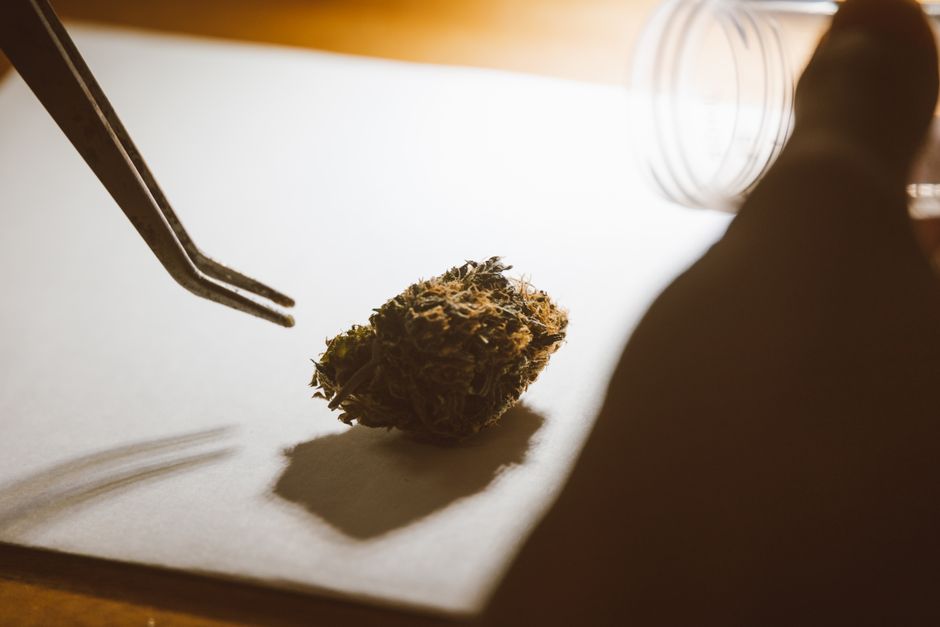
Unregulated vape risks include uncertain strength, contamination, inaccurate labels and poor-quality or unsuitable ingredients. With an unknown product, you may not know how much THC you are taking or whether the contents match the packaging. If you experience concerning symptoms after using any product, stop and seek medical advice; call 999 for a medical emergency.
Vaping is not smoking
Vaping involves heating a product to produce an aerosol; smoking involves burning material and inhaling smoke. They are different routes, with different products and risks. A prescribed cannabis flower product intended for vaporisation is not automatically suitable for smoking, and a cartridge sold for vaping is not automatically a prescribed medicine. Follow the instructions for the exact product you were dispensed and ask your pharmacist before changing the method of use.
Do not assume that a product marketed as a vape cartridge is suitable for a standard e-cigarette device. Device compatibility, dose delivery and ingredients are clinical and safety questions—not just consumer preferences.
Using Trustpilot and Similarweb carefully
Trustpilot can help you see what customers say about a clinic or retailer, but reviews do not establish that a product is regulated, that a prescriber is appropriately registered, or that a pharmacy supplied a particular medicine lawfully. Reviews may be incomplete, outdated or focused on customer service rather than clinical quality.
Similarweb can provide estimates of website traffic and audience patterns. It does not verify a company’s medicines, clinicians, pharmacy registration or legal status. Use both tools only as background research, alongside checks with the GMC, GPhC and relevant regulators. Neither tool is a substitute for a prescription or professional advice.
Bottom line
A THC vape is not “regulated” simply because it is sold in the UK, described as medical, or reviewed positively. The practical checks are whether a qualified specialist assessed and prescribed it for you, whether a registered pharmacy dispensed it through an appropriate supply chain, and whether the product and instructions match your prescription.
- Check the prescriber on the GMC register and, where relevant, the Specialist Register.
- Verify the dispensing pharmacy with the GPhC or the relevant regulator for your UK nation.
- Ask whether the medicine is licensed or unlicensed, and what evidence supports its batch and cannabinoid content.
- Do not import, buy or use an unverified THC product based on a website claim.
- Ask your clinician or pharmacist before changing the product, dose or method of use.
The 2018 change created a controlled medical prescribing route; it did not make recreational THC products freely legal. When in doubt, pause before using the product and ask the prescriber or dispensing pharmacist to verify it.